
| Search PNC News for stories of people and churches in our UCC Conference: |
|---|
PNC is in a season to learn to lead from the truth
Curiosity invites us to slow down and ask:
‘What do you mean by that?’
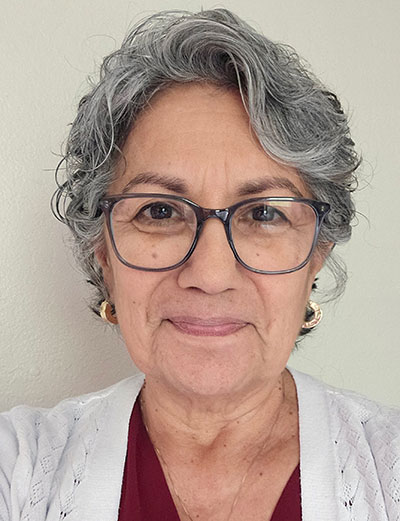 |
Lorraine Ceniceros - acting conference minister |
When I began my doctor of ministry work, I thought I was studying leadership. What I discovered was that I was really studying myself.
My project explored the experiences of a third-generation Mexican American woman serving in leadership within a predominantly White denomination.
Through research, reflection and telling my own story, I began to understand things I had not fully seen before. I examined how assimilation had shaped me, the ways I carried internalized racism and how I had learned to navigate spaces where some parts of me felt welcome while other parts remained hidden.
The work was both liberating and unsettling. I learned that self-awareness is not something we achieve once and then move beyond. It is the ongoing work of telling ourselves the truth. It asks us to acknowledge both our gifts and our wounds. It asks us to pay attention not only to what we have learned, but also to what we have learned to avoid.
One lesson continues to stay with me: healing often begins when we become curious rather than defensive.
Another lesson emerged as I explored how people understand themselves and one another. We often assume that the words we use mean the same thing to everyone listening. However, words are shaped by culture, experience, history and identity.
Take the phrase “woman of color.” For some people, it means any woman who is not White. For others, it specifically evokes the experiences of Black women. Neither understanding is necessarily wrong. The challenge comes when we assume everyone hears the phrase in the same way.
What I have learned is that many misunderstandings do not begin with bad intentions. They begin when we assume we mean the same thing by the words we use. Curiosity invites us to slow down and ask, “What do you mean by that?” It is a simple question, but it can open the door to deeper understanding and stronger relationships.
As I have begun learning about the Pacific Northwest Conference, I have also become aware of the grief present in the conference’s life. Some of that grief is connected to specific events and experiences. Some of it is connected to transitions, disappointments, unmet expectations and strained or broken relationships. Some of it is simply the grief that accompanies change.
What has struck me is that this grief is not unique to the Pacific Northwest Conference.
Across the church, conferences and congregations are carrying grief. We grieve declining numbers, changing patterns of ministry, financial uncertainty, cultural shifts and the loss of familiar ways of being church. We grieve conflicts that were never fully resolved. We grieve leaders who left, members who departed and dreams that did not unfold as we had hoped.
Often, we carry these losses quietly.
The challenge is that grief does not disappear simply because we stop talking about it. Unacknowledged grief often finds other ways to express itself. It can become anxiety, resistance, suspicion, exhaustion or conflict. It can make us cautious about trusting one another or reluctant to imagine new possibilities.
Grief itself is not the enemy.
Grief is evidence that something mattered.
The question before us is not whether grief exists. The question is whether we are willing to face it with honesty and care. When we do, grief can become a teacher. It can help us understand what we value, deepen our compassion and prepare us to move forward without pretending the past did not happen.
As I begin serving alongside the Pacific Northwest Conference, I find myself carrying these lessons with me. I do not arrive with all the answers. I arrive with curiosity, a willingness to listen and a belief that every conference has stories that deserve to be heard before anyone attempts to write the next chapter.
At this point in my life, what I bring is not certainty. I bring experience shaped by both successes and mistakes, joys and disappointments. I bring a greater awareness of my own blind spots and assumptions than I had when I first entered ministry. I bring a willingness to sit with difficult truths without rushing to fix them or explain them away.
I also bring a deep belief that God is still at work, even in seasons of uncertainty, grief and transition. Some of the most important things I have learned have emerged not from moments of success, but from moments of discomfort, loss and change. Those experiences have taught me that healing rarely begins with answers. More often, it begins when we are willing to be honest about where we are and curious about where God may be leading us next.
Peace and courage,
Lorraine
Pacific Northwest United Church of Christ Conference News © June 2026
Share this article on your favorite social media 